

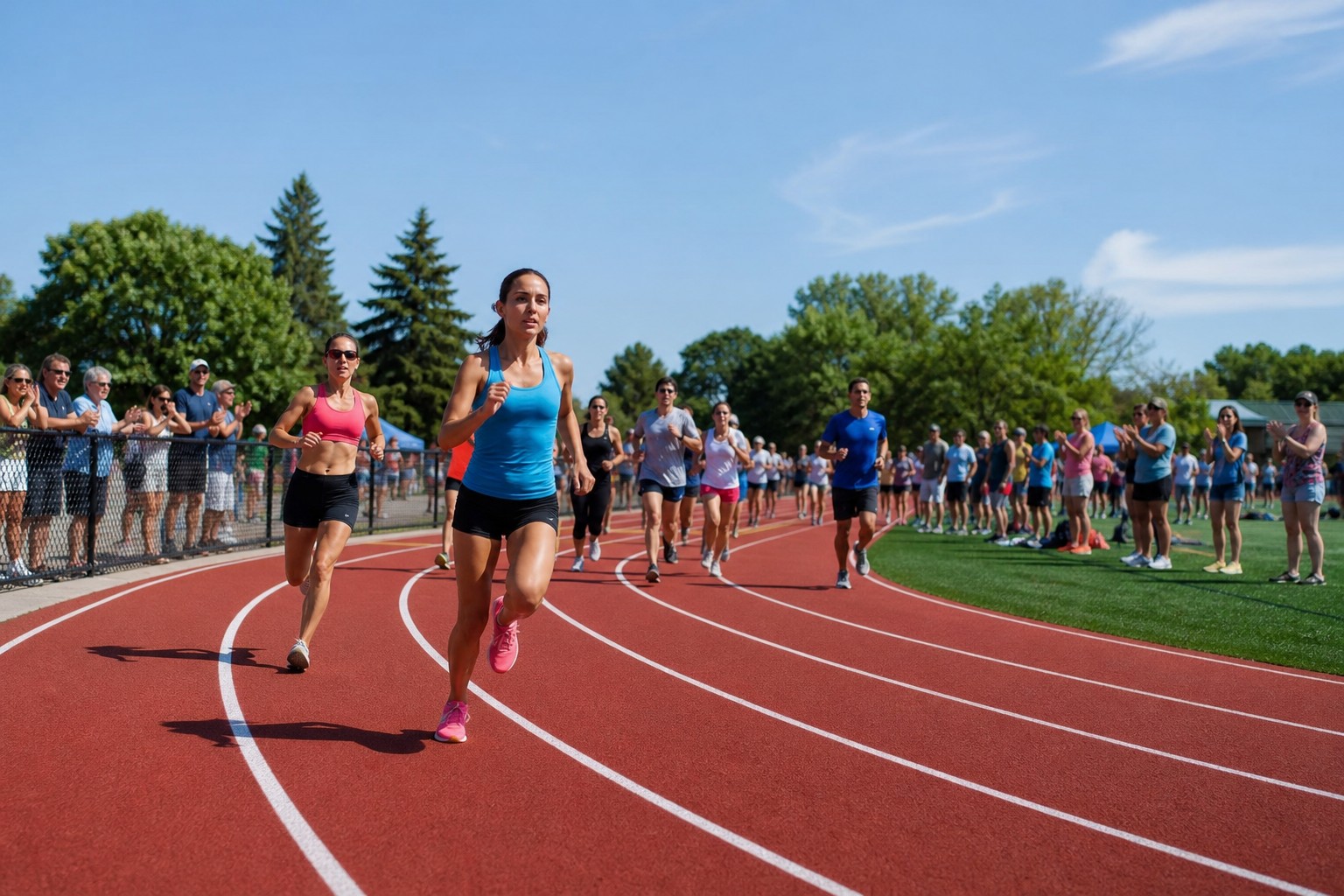
The Story Behind the MN Mile: Why Let’s Fuel Growth Built a Running Benefit for Youth Mental Wellness
The MN Mile did not start with a business plan. It started with a question: what would it look like to build an event where the point is not the finish line, but what the finish line funds?
Let’s Fuel Growth is a Minnesota 501(c)(3) that exists because Ryan Rivard decided that purposeful adventure and mental wellness could live in the same sentence. The MN Mile is the latest expression of that idea: a two-event running benefit at Minnetonka High School Track on August 8, 2026, where every dollar raised goes to youth mental wellness programming.
Here is how it came together.
The Problem That Created the Event
Minnesota has a youth mental health crisis that does not get the urgency it deserves. The numbers are not ambiguous. According to the Minnesota Student Survey (2022), 1 in 3 Minnesota high school students reported persistent feelings of sadness or hopelessness. 1 in 5 seriously considered suicide. The demand for adolescent mental health services consistently outpaces supply, particularly in suburban communities where the assumption is that resources are adequate.
LFG works with young people who have faced adversity. Not in a clinical setting, but through physical challenge, outdoor adventure, and community. The model is simple: put young people in hard situations alongside adults who care, and watch what happens to their confidence, their resilience, and their willingness to ask for help.
The problem is funding. Nonprofits like LFG compete for a shrinking pool of grants and donations. Events create a different funding channel: one that brings new people into the community, gives them a visceral experience of the mission, and creates a reason to give beyond a tax deduction.
Why a Mile
A mile is specific. It is not a 5K, which has become the default for charity running events. It is not a marathon, which limits participation to serious runners. A mile is four laps on a track. It takes elite runners under four minutes and casual joggers under ten. It is short enough to be achievable for almost anyone and intense enough to mean something when you finish.
The mile is also the most watchable running event. Every spectator can see every runner for the entire race. There is no disappearing around a corner for 45 minutes. Parents watch their kids the whole way. Friends cheer from the infield. The energy stays contained and concentrated.
That containment is part of the design. The MN Mile is not supposed to feel like a mass event where you are alone in a crowd. It is supposed to feel like your community showed up for something together.
Why Two Tracks
The decision to split the MN Mile into two events was not about accommodating more people. It was about serving two fundamentally different needs under one umbrella.
The Naughty Mile is competitive. Three heats, chip-timed, 180 racers, awards for top finishers. It exists for people who want to test themselves. Founders, athletes, trainers, and anyone who wants to know their number. The name is intentional: it signals intensity, not gentleness.
The Nice Mile is the opposite. One lap, any way you want to move. Walk, skip, dance, push a stroller, roll a wheelchair. The only rule is that you cannot do the same movement twice in a lap. It is built for families, for kids, for grandparents, for people who would never sign up for a timed race but will absolutely show up for a slip and slide, a bubble zone, and a DJ.
Together, the two tracks make the MN Mile something that most community events are not: a place where a competitive runner and a five-year-old in a stroller are both having the best version of their day.
Why Minnetonka
Minnetonka High School Track is the venue because the school community said yes. The MHS Track Director donated the facility for the day. Minnetonka Schools signed on as a community partner because the mission aligns with what they already care about: supporting the mental health of young people in ways that go beyond traditional programming.
The venue also solves a practical problem. A 400-meter track is a controlled environment. It is wheelchair accessible. It has spectator areas, parking, and infrastructure. It does not require road closures, permits for public right-of-way, or course marshals. The simplicity of the venue lets the event focus on what matters: the people on the track and the cause they are running for.
Why Sober Active
The MN Mile features non-alcoholic beverages only. Athletic Brewing and Urban Growler NA anchor the festival. There is no beer tent.
This decision comes from LFG’s DNA. The organization has roots in recovery and sober-active culture. Not every LFG participant or supporter is sober, but the organization believes that community events should be accessible to everyone, including the roughly 30 million Americans in recovery who often avoid events where alcohol is the social centerpiece.
For families, it also means the event is genuinely kid-friendly. Not “kid-friendly with a beer garden on the other side of the fence.” Kid-friendly, full stop.
Where the Money Goes
100 percent of net proceeds from the MN Mile fund LFG youth programming. The fundraising goal is $25,000. Every registration is tax-deductible. Every optional donation is tax-deductible. Let’s Fuel Growth EIN: 99-1365869.
That money funds adventure-based mental wellness programming for young people in Minnesota. Expeditions, community events, mentorship, and the operational work that makes all of it possible. It does not fund overhead or executive compensation. It funds the work.
The Bigger Picture
The MN Mile is not the only thing LFG does. The organization runs the Fuel Growth Summit, Everest Base Camp treks, community volunteer events, and ongoing youth programming throughout the year. But the MN Mile is the most public-facing expression of what LFG believes: that hard things, done together, in service of something bigger than yourself, can change how a young person sees themselves and their future.
If you have ever wished there were more events like this in your community, this is your chance to build one. Donate, volunteer, register, or simply show up on August 8 and be part of it.
Questions: letsfuelgrowth.org/contact-us or [email protected].